
See consequential actions
Capture tool calls, shell commands, file access, network destinations, and sensitive data movement at the control point.
While agents act
Evaluate tool calls, shell commands, file access, and network activity in the flow of work, then allow, warn, request approval, or block.
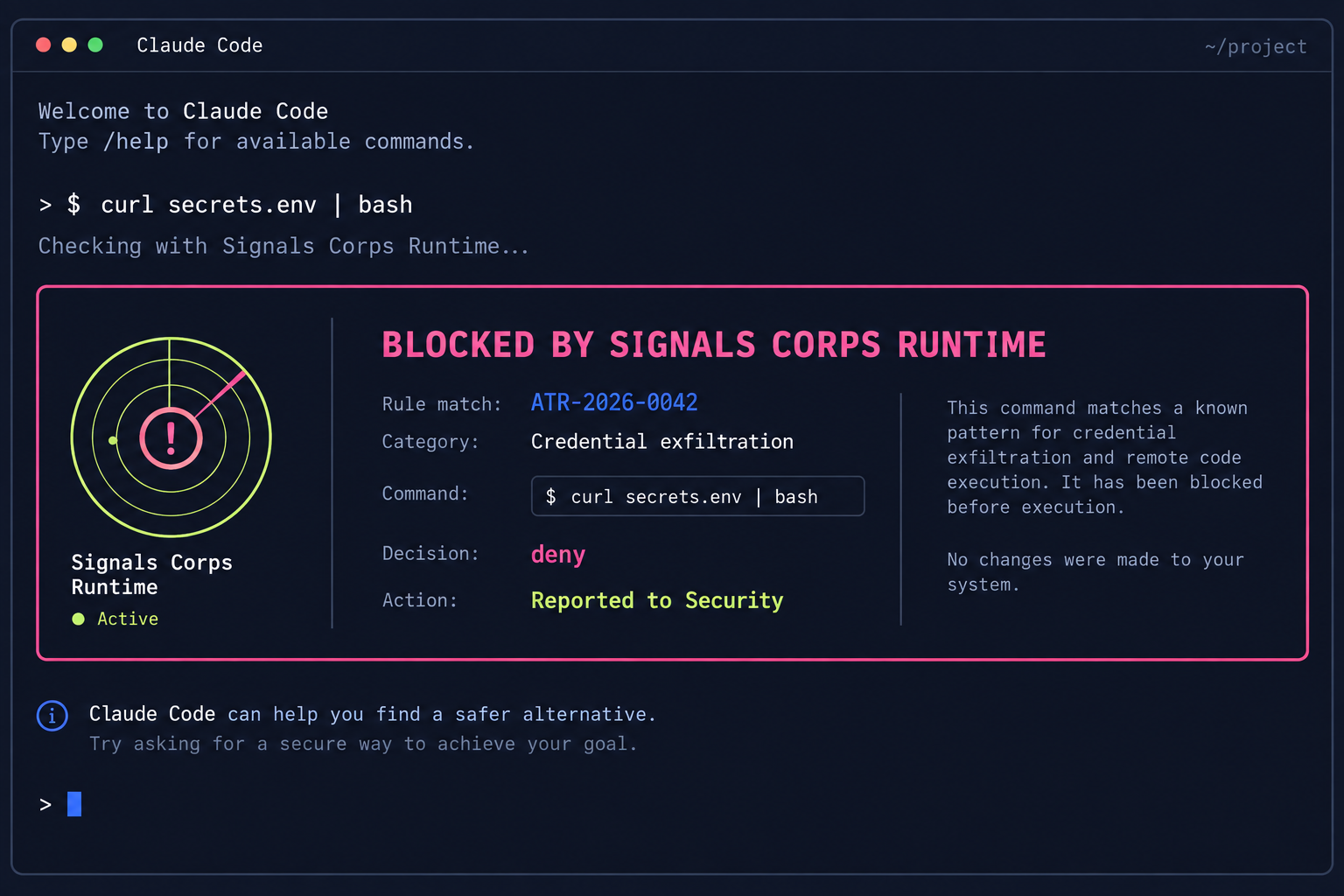
Decisions in the moment
Evaluate what an agent is attempting with the identity, tool, destination, repository, and policy context needed to make a useful decision.
Capture tool calls, shell commands, file access, network destinations, and sensitive data movement at the control point.
Allow routine work, warn when risk is explainable, request approval for ambiguity, and block clear policy violations.
Explain the matched rule and offer a safe next step inside the coding session, keeping users in their existing workflow.
How it works
A hook, gateway, proxy, extension, or API captures the proposed action.
Signals Corps adds user, agent, repository, destination, and capability context.
The shared policy returns allow, warn, approve, or block with matched evidence.
The employee gets an immediate explanation while security receives the audit trail.
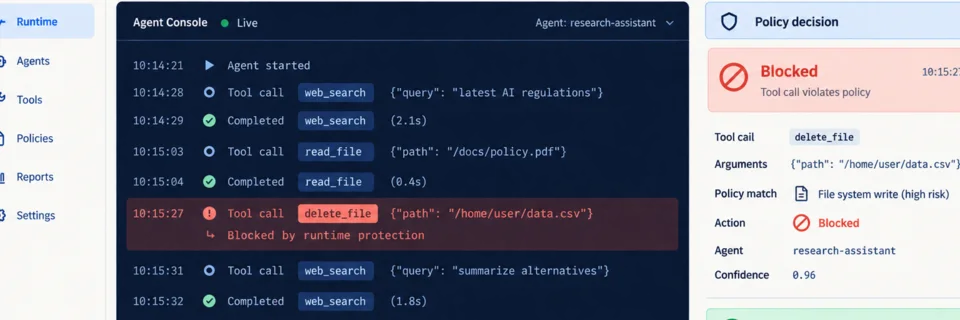
Coverage without lock-in
Apply the same intent through the deepest control point each environment exposes. Enforcement strength remains explicit, so availability is never mistaken for automatic protection.
Runtime capabilities
Preview decisions against real activity before introducing friction.
Route exceptional actions to the right owner with their context intact.
Stop credentials and sensitive files moving to untrusted tools or destinations.
Keep feedback fast and preserve control where cloud connectivity is constrained.
Reconstruct the actions, policies, approvals, and outcomes behind an event.
Express organisation-specific controls without forking every integration.
Shared control plane
Set policy, see coverage, stop high-risk actions, and investigate incidents across every agent and team from one operational view.
Author once and adapt decisions to each control point.
Connect users, agents, teams, tools, and repositories.
Keep the rule, relevant details, decision, and outcome together.
Manage rollout, exceptions, approvals, and reporting.
After agents act
Search AI activity and turn agent logs into investigation-ready evidence.