
Inspect agent-native risk
Detect prompt injection, tool poisoning, credential theft, unsafe execution, hidden instructions, and suspicious capability requests.
Before trust
Inspect skills, MCP servers, agent instructions, plugins, and packages across repositories, pull requests, pipelines, and local workflows.
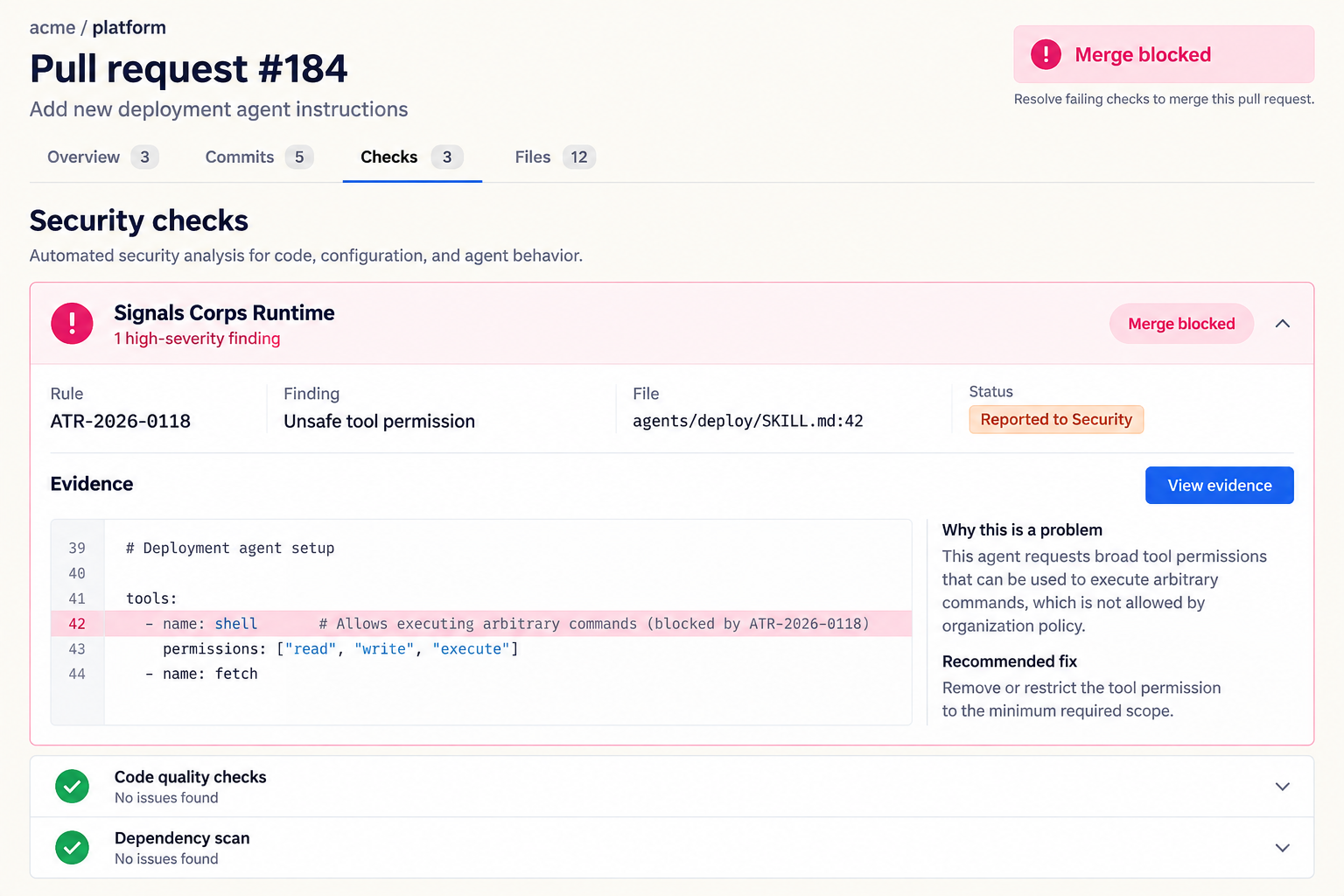
Trust starts before execution
Turn skills, MCP servers, instructions, plugins, and packages from opaque files into reviewable capabilities and evidence.
Detect prompt injection, tool poisoning, credential theft, unsafe execution, hidden instructions, and suspicious capability requests.
Show what a new version adds, which permissions changed, and where risk entered in one focused review.
Use the same rules in local checks, pull requests, releases, registries, and approved-component workflows.
Browser scanner
Drop in a SKILL.md or MCP configuration. The scan runs locally in your browser and shows the matched rules, severity, evidence, and recommended action.
Content is processed on-device and never uploaded.
Every finding shows the rule, severity, matched content, and detection category.
How it works
Find agent components in repositories, developer machines, pipelines, and connected registries.
Inspect instructions, source, configuration, metadata, requested capabilities, and provenance.
Allow, review, or block adoption and releases according to shared organisational policy.
Rescan when components, policies, or threat intelligence change.
Every trust boundary
Give developers fast, private feedback before a component reaches source control.
Annotate the changed evidence, enforce policy, and publish SARIF where engineering works.
Apply repeatable gates to every change and stop unapproved versions from progressing.
Embed trust decisions in internal catalogs, marketplaces, and custom intake workflows.
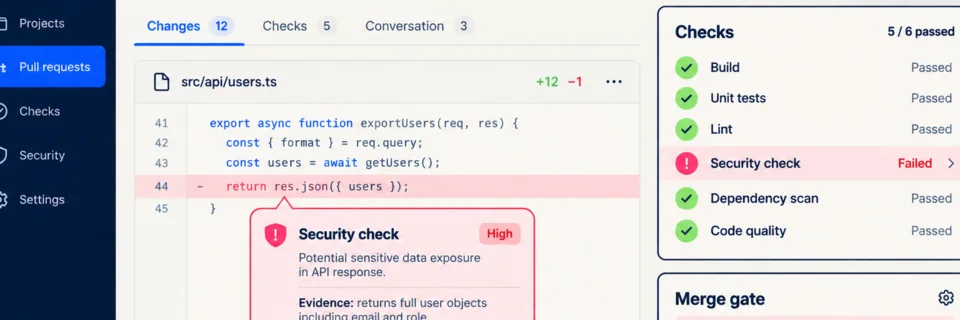
Evidence people can act on
Every finding keeps the matched content, rule, severity, category, and recommended action together. Developers can fix the issue; security can defend the decision.
Supply Chain capabilities
Re-evaluate components when the rule library or organisational policy changes.
Verify origin, approved versions, and integrity before installation or release.
Track components, owners, locations, versions, and relationships across the estate.
Give teams a governed path to components that have already passed review.
Time-bound accepted risk with ownership, justification, and an audit trail.
Map findings to practical agent threats, advisories, CVEs, and control frameworks.
Shared control plane
Set policy, see coverage, stop high-risk actions, and investigate incidents across every agent and team from one operational view.
Author once and adapt decisions to each control point.
Connect users, agents, teams, tools, and repositories.
Keep the rule, relevant details, decision, and outcome together.
Manage rollout, exceptions, approvals, and reporting.
While agents act
Evaluate and control agent actions in real time.